
From Breakthroughs to Better Health: Biochemical Sciences Tutorial Centennial Continues October 3
From understanding how the immune system controls its responses to developing cancer vaccines, investigating health disparities, and translating discoveries into new medicines, the second event celebrating the 100th anniversary of Harvard’s Biochemical Sciences Tutorial will highlight the many paths curiosity-driven science can take to improve human health.
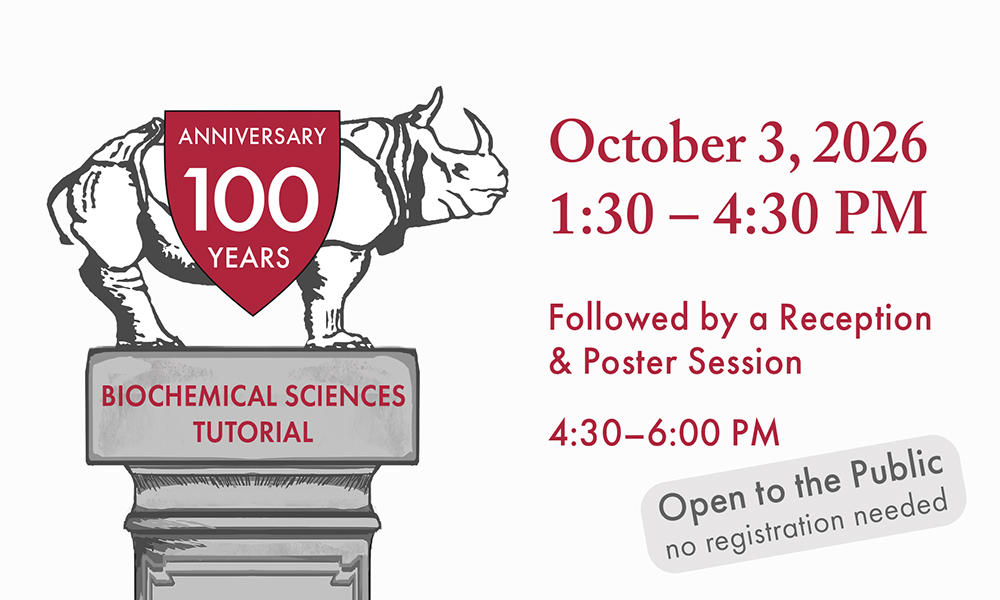
“From Breakthroughs to Better Health,” a series of short talks followed by a moderated panel discussion featuring five distinguished alumni of the tutorial program, will take place Saturday, October 3, from 1:30 to 4:30 p.m. in Lecture Hall C of the Science Center. The event is open to the public, with no registration required, and will be followed by a reception and student poster session from 4:30 to 6 p.m. in Cabot Library.
The program is the second in a series marking a century of the Biochemical Sciences Tutorial, which has helped generations of Harvard undergraduates learn to think deeply about science while pursuing independent research. The centennial series launched in the spring with an event focused on the power of scientific thinking.
“The overarching theme for the entire series is to show how curiosity-driven science is essential for any kind of breakthroughs,” said Takao Hensch, professor of molecular and cellular biology (FAS) and neurology (HMS), who will moderate the October event. This round features alumni whose careers demonstrate how fundamental scientific discoveries can move toward clinical and public-health applications.
The panel includes Arlene Sharpe ’75, PhD, Kolokotrones University Professor at Harvard University and chair of the Department of Immunology at Harvard Medical School, a pioneer in understanding immune checkpoint regulation; and Catherine J. Wu ’88, MD, professor of medicine and chief of the Division of Stem Cell Transplantation and Cellular Therapies at Dana-Farber Cancer Institute, whose work includes developing personalized cancer vaccines. Nancy Krieger ’80, PhD, professor of social epidemiology at the Harvard T.H. Chan School of Public Health, will bring a population-health perspective to the discussion. Her research has examined how social conditions and inequities become reflected in patterns of health and disease.
The panel also includes two alumni whose careers bridge academic discovery to biotechnology industry. Levi A. Garraway ’90, MD, PhD, is executive vice president, head of Global Product Development, and chief medical officer for Roche and Genentech. Howard Y. Chang ’94, MD, PhD, is chief scientific officer and senior vice president of Global Research at Amgen and is known for pioneering work in noncoding RNAs and the co-invention of ATAC-seq.
Each panelist will begin with a short introduction to their work and career before joining Hensch for a broader discussion. The format is designed not only to celebrate what alumni have accomplished but also to give today’s students a sense of where a scientific education can lead.
That is especially important now, Hensch said, as students consider careers in science at a challenging moment for research.
“The main goal for all of this is to motivate interest in basic science and research careers among our undergraduate students, in particular,” he said. “Leading by example, these amazing alumni who have come through the program should help stimulate that interest.”
Hensch also hopes the event will speak to increasing undergraduate interest in biotechnology and entrepreneurship. Several panelists have taken discoveries emerging from basic research and helped move them toward applications that can directly affect thousands of patients.
“The centennial celebration will conclude with a third event in March 2027, “Transforming Biological Discovery,” featuring a greater emphasis on discovery science and remarks by MCB’s Nancy Kleckner, Herchel Smith Professor of Molecular Biology and a pioneering geneticist whose research has transformed understanding of chromosome biology.
March 15, 2026_The first of three events
In 1926, Harvard introduced a distinctive approach to undergraduate science education: the Biochemical Sciences Concentration and Tutorial, overseen by the Board of Tutors in Biochemical Sciences. Built around small-group discussions, close mentorship, and intensive engagement with primary scientific literature, the program was designed to help students develop the habits of mind essential for scientific discovery.
Nearly a century later, that tradition remains a defining feature of Harvard’s life sciences education. In 2026–2027, the Harvard community will celebrate the Board’s 100th anniversary with a year-long series of events honoring its history and the many students and faculty who have participated in it over the decades.



From its earliest days, the program reflected Harvard’s tutorial model, which emphasizes learning through discussion rather than lectures alone. Today, the tutorial supports undergraduate concentrators in both Molecular and Cellular Biology (MCB) and Chemical and Physical Biology (CPB). Students in these concentrations are paired with faculty tutors who meet with them regularly throughout their undergraduate years to discuss research papers, scientific ideas, and career paths.
Dominic Mao, Assistant Director of Undergraduate Studies for CPB and MCB, who has been a tutor and helped administer the program since 2017 explains that “the Biochemical Sciences Tutorial uses a format that focuses on pure learning. We pair students with a tutor when they join our concentration, and the pairings remain in place until they graduate. Learning, realized through primary literature reading, happens in a low‑stakes, high‑reward setting, as there are no grades or credits associated with the tutorial. Besides the science, students learn to foster a professional relationship.”
Stephen C. Harrison, Professor of Biological Chemistry and Molecular Pharmacology, who played a central role in guiding the program for decades, including serving as Head Tutor from 1972-1996, adds that “the idea was that students shouldn’t just absorb facts about biology—they should learn how to think about scientific problems and how discoveries actually emerge from evidence.”
The program traces its origins to Lawrence J. Henderson, a Harvard physiologist who recognized—remarkably early—that biology would eventually become a molecular science. In 1926, Henderson helped establish the Biochemical Sciences concentration and the Board of Tutors in Biochemical Sciences, a faculty body responsible for advising students and guiding the tutorial program.
At the time, much of Harvard’s biology teaching in Cambridge focused on organismal and evolutionary biology. Henderson recognized that emerging discoveries in biological chemistry would reshape the life sciences and believed students needed a new kind of training to understand them.
Over time, the tutorial program became a central component of Harvard’s undergraduate training in the life sciences. Each tutor typically worked with a small group of students—sometimes individually, sometimes in groups of two to four—meeting regularly to discuss research papers and scientific concepts.
“It’s basically a chance for students to develop an intellectual relationship with a real practicing scientist,” Harrison says. “They read papers, discuss the experiments, and think about how scientists interpret evidence.”
Tutors also serve as primary academic advisors, mentoring students throughout their concentration and helping guide them toward laboratory research and senior honors thesis projects.
The Biochemical Science Tutorial itself became a substantial academic community, often including dozens of faculty members and postdoctoral fellows drawn from Harvard’s Cambridge departments, affiliated hospitals, and the medical school.
“One of the advantages of the system was that we could recruit people working in new areas of science and expose undergraduates to those fields long before they became standard parts of the curriculum,” Harrison says.
The broader academic structure surrounding the tutorial program evolved over the years. The original Biochemical Sciences concentration eventually gave rise to the modern undergraduate MCB and CPB concentrations. Despite these structural changes, the tutorial program remains a shared intellectual tradition within both concentrations and continues to thrive today.
This year’s centennial celebration therefore marks not only the longevity of the tutorial program itself, but also its continued role in shaping undergraduate education across Harvard’s life sciences community.
The celebration will include three major events spanning the 2026–2027 academic year, each highlighting different dimensions of the program’s legacy.
“I am excited for our alumni speakers to inspire the next generation of scientists and STEM-educated leaders by sharing their unique stories,” Mao says. “The 100th anniversary is a great milestone to celebrate the past, and what better way to do so than by using it to inspire the next generation? Here’s to 100 more years!”
The first event will serve as the centennial kickoff, taking place on April 22, 2026, at the Science Center.
The Power of Scientific Thinking: From Classroom to Crisis
Science Center, Lecture Hall C
6:00–8:00 pm
The evening will feature remarks from Harrison and a panel discussion with distinguished alumni of the Biochemical Sciences Tutorial, whose careers illustrate the Tutorial’s broad influence.
Panelists include:
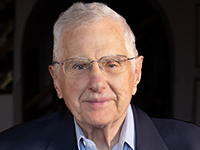
Bruce Alberts ’60, Chancellor’s Leadership Chair in Biochemistry and Biophysics for Science and Education, Emeritus, at the University of California, San Francisco, and former president of the U.S. National Academy of Sciences. Alberts is also the lead author of Molecular Biology of the Cell, widely considered the “bible” of molecular biology and still used by generations of students studying the field today.
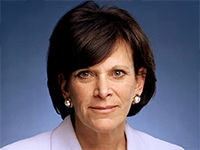
Jessica Tuchman Mathews ’67, former president of the Carnegie Endowment for International Peace and a former member of the Harvard Corporation.
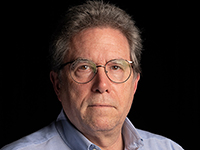
David J. Anderson ’78, professor at Caltech and investigator with the Howard Hughes Medical Institute.
A reception will follow the panel discussion.
From Breakthroughs to Better Health
A second centennial event will take place on October 3, 2026. This full-day program will explore advances in biomedical research and their implications for global health and precision medicine.
Speakers will include leading scientists and physicians such as Arlene Sharpe, Nancy Krieger, Catherine Wu, Levi Garraway, and Howard Chang.
Transforming Biological Discovery: From Tools to New Questions
The final event, scheduled for March 2027, will focus on the tools and technologies transforming modern biology.
The event will feature prominent alumni, including Martin Chalfie ’69, Marian Carlson ’75, and Karl Deisseroth ’92.
For MCB Chair Rachelle Gaudet the centennial celebration represents an opportunity to recognize the program’s enduring impact.
Gaudet, who previously served as Head Tutor for the Biochemical Sciences Tutorial starting in 2005 and later as Faculty Director of the CPB concentration until 2023, initiated the idea of organizing a year-long celebration to mark the milestone.
Gaudet is looking forward to the celebration. “Over the last 100 years, thousands of Harvard students have benefited from the Biochemical Sciences Tutorial, and many of those alumni have gone on to play transformative roles in science, medicine, policy, and beyond,” she says. “These events will bring together current students, alumni, tutors, and faculty to celebrate that shared history and reconnect across generations of the program. I also hope they will inspire today’s students by showing how a foundation in scientific thinking can lead to many different paths and contributions.”
She notes that the centennial coincides with another important milestone: the 20th anniversary of the MCB and CPB undergraduate concentrations, which emerged from the earlier Biochemical Sciences program.
A century after its founding, the Biochemical Sciences Tutorial continues to embody a core principle of scientific education: that discovery begins with curiosity, critical thinking, and conversation.
Through its tutorial discussions, mentorship, and engagement with original research, the program continues to shape new generations of students—just as it has for the past hundred years.